
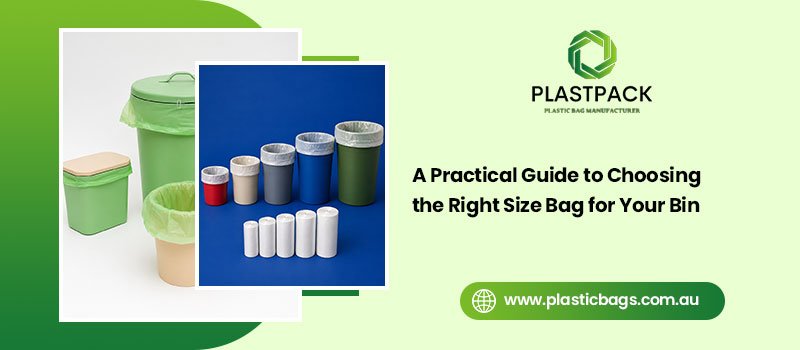
Choosing a bin bag sounds like one of the simplest tasks in the world. In practice, most people have ended up with a bag that slips into the bin halfway through the day, or one so oversized it bunches awkwardly around the rim and tears the moment you try to lift it. Getting the right fit takes about two minutes of measuring and a basic understanding of how bin bags are sized. This guide covers everything you need to know, from accurately measuring your bin to matching the right size, thickness, and material to your specific needs.
Why Getting the Right Size Bin Bag Matters
A poorly fitted bin liner causes real problems that go beyond minor inconvenience. A bag that is too small for the bin will slip down under the weight of waste, leading to spills inside the bin and a messy clean-up job that nobody wants. A bag that is far too large creates excessive overhang, wastes material, and can make it harder to seal and carry.
Beyond fit, choosing the right size also affects how efficiently you manage waste. A bag that matches your bin capacity means fewer mid-week bag changes, less plastic waste overall, and a cleaner, more organised space at home, in the office, or across a commercial facility.
How to Calculate Bin Liner Size: Measure First, Buy Second
The most reliable way to answer the question of what size bin bag do I need is to measure your bin directly rather than guessing based on the litre capacity printed on the bin. Here is a simple method that works for any bin shape.
For square and rectangular bins: Add up all four sides of the top opening, then divide that total by two. The result is the open width your bin bag needs. Measure the height of the bin from top to bottom and add around 20 percent extra to allow for a comfortable overhang when tying the bag off. That gives you the required length measurement.
For round bins: Measure the diameter across the top of the bin and multiply it by 3.14 to get the circumference. Divide that number by 2 to get the required open width. Then measure the bin height and add 20 percent for overhang.
Example: A rectangular kitchen bin measuring 30 cm by 25 cm across the top has a perimeter of 110 cm. Dividing by two gives an open width of 55 cm. If the bin is 45 cm tall, you would want a bag around 55 cm long.
Keep in mind that the dimensions printed on bin bag packaging and the litre capacity do not always align with every bin shape. Use the dimensions as your primary reference and treat the litre figure as a secondary guide.
Bin Bag Sizes in Litres: A Practical Reference Guide
Most bin bags sold in Australia are categorised by volume capacity in litres. Below is a general overview of how common sizes match to typical bin uses across homes and workplaces.
8 to 15 litres suit desktop bins, bathroom pedal bins, and small kitchen caddies used for collecting food scraps. These are the smallest commonly available sizes and are typically used in spaces that generate low waste volumes between empties.
20 to 30 litres covers small to medium kitchen bins and office waste bins. A 30L bin bag size guide entry is one of the most commonly searched sizes in Australia because it aligns with the standard under-bench kitchen bin found in many households.
50 to 60 litres is where medium to large household bins sit. A 50L or 60L bin bag size guide is relevant to families with larger kitchen and laundry bins, as well as shared office spaces. These bags need to be strong enough to hold a full load of mixed household waste without tearing at the base.
70 to 80 litres fit larger indoor commercial bins used in offices, school classrooms, and food service areas.
120 to 140 litres suits small council wheelie bins and commercial outdoor bins. These are commonly used in smaller households that receive fortnightly council collections.
240 litres is the standard size for large council wheelie bins used by most Australian households and small businesses. This is the most widely used bin size for general household rubbish and recycling collections.
When buying in bulk for commercial or industrial applications, having this bin bag size breakdown in litres on hand saves time and reduces the risk of ordering a batch that does not fit your bins.
Getting the Thickness Right: Light Duty to Heavy Duty Bin Bags
Matching the size is only half the job. The thickness of a bin bag, measured in microns, determines how well it handles the weight and type of waste you put in it.
15 to 20 microns is appropriate for light office waste such as paper, tissues, and dry materials. These bags are cost-effective and widely used in desk bins and meeting rooms.
25 to 30 microns suits general household kitchen waste and café or restaurant food scraps. This is the most common thickness for standard residential garbage bags in Australia.
35 to 50 microns is the zone for heavy-duty bin bags. These are the right choice for food production, hospitality kitchens, heavy commercial waste, and bins that regularly hold sharp packaging or bottles.
60 microns and above are used in industrial and construction applications where puncture resistance is the priority. For the best bin bags for heavy waste in commercial environments, this thickness range provides the durability needed to avoid splits and leaks during handling.
The material also makes a difference. LDPE (Low-Density Polyethylene) bags are softer, more flexible, and better at resisting punctures caused by sharp or awkward items. HDPE (High-Density Polyethylene) bags are thinner and slightly stiffer, making them well-suited to dry, light waste in office or retail settings. For kitchen or food waste applications, LDPE is generally the more reliable choice.
Eco-Friendly Bin Bags: Matching the Right Material to the Right Bin
If sustainability is a factor in your purchasing decision, understanding the difference between biodegradable and compostable bin bags will help you make a choice that actually delivers environmental benefit rather than simply carrying an eco-sounding label.
Compostable bags are made from plant-based materials, such as corn starch, and must meet Australian composting standards, either AS 4736 (commercial composting) or AS 5810 (home composting). These are the right liners to use when your bin collects food scraps destined for a FOGO bin or home compost system. Using a certified compostable liner in your organics bin allows the entire contents to be processed together.
Biodegradable bin bags vary considerably in what that label actually means in practice. Some are genuinely plant-derived, while others are standard plastic with added additives. Look for certified Australian standards rather than relying on the term “biodegradable” alone. Unless the product references AS 4736 or AS 5810, the claim carries limited regulatory weight.
Recycled plastic garbage bags offer a practical and cost-effective middle ground for general waste bins. Made from post-consumer plastic, they reduce the demand for virgin petrochemical production while performing identically to standard bags. For commercial operations managing large volumes of general waste, bulk purchasing of recycled-content bags is a sensible approach.
For households running a multi-bin system at home or a segregated waste station at a workplace, matching the liner material to the bin function makes a real difference to how effectively your waste is processed downstream.
Quick Reference: Matching Common Bin Types to Bag Sizes
| Bin Type | Approximate Capacity | Recommended Bag Size |
| Desktop or bathroom bin | 8 to 15 L | 8 to 15 L liner |
| Kitchen caddy for food scraps | 10 to 20 L | 10 to 20 L compostable liner |
| Standard kitchen bin | 25 to 35 L | 30 L bag |
| Medium kitchen or office bin | 45 to 55 L | 50 to 60 L bag |
| Large household indoor bin | 65 to 80 L | 70 to 80 L bag |
| Small council wheelie bin | 120 to 140 L | 120 to 140 L liner |
| Standard council wheelie bin | 240 L | 240 L liner |
Always size up rather than down when in doubt. A bag that is slightly larger than your bin is always easier to use than one that is fractionally too small.
Buying in Bulk: What to Consider
For businesses, facilities managers, and households that use bin liners in volume, buying in bulk significantly reduces the cost per unit and ensures a consistent supply. When placing bulk orders, confirm both the litre capacity and the physical dimensions of the bags, as different manufacturers produce bags with varying dimensions even within the same litre category.
If your operation uses multiple bin sizes across different areas, such as a production floor, kitchen, and office, ordering a range of sizes and keeping a clearly labelled stock makes daily bag replacement faster and reduces the chance of the wrong bag ending up in the wrong bin.
Frequently Asked Questions
How do I know what size bin bag I need without measuring?
The most reliable starting point is to check the litre capacity printed on your bin. Match that number to the bag size listed on the packaging, then choose one size up to ensure a comfortable fit. If you can measure the bin’s dimensions, even better, as this gives a more accurate result than relying on litres alone.
Is a 30L bin bag suitable for a standard kitchen bin?
For most single or two-person households, yes. A 30L bin bag size is ideal for the standard under-bench kitchen bin used in Australian homes. Larger families or households that generate more food and packaging waste may find a 50L or 60L bag more practical, as it reduces how often the bin needs to be emptied.
What thickness should I choose for heavy-duty bin bags in Australia?
For heavy waste, look for bags in the 35 to 50 micron range made from LDPE film. Heavy-duty bin bags in this thickness range handle wet, sharp, and bulky materials without splitting at the base. For industrial or construction waste, 60 microns and above is more appropriate.
Can I use a compostable bin liner in my council’s FOGO bin?
In many Australian councils, yes, provided the liner is certified to AS 4736 or AS 5810. However, acceptance varies by local area, so it is worth checking your council’s specific guidelines before using compostable liners in your green organics bin to avoid contaminating the collection.
What is the difference between biodegradable and compostable bin bags?
Compostable bags meet certified Australian standards for complete breakdown within defined timeframes and leave no toxic residue. Biodegradable, as a standalone claim, has no regulated timeframe in Australia, and some bags labelled biodegradable still contain petrochemical plastic. For genuine eco-friendly bin bags, look for AS 4736 or AS 5810 certification rather than relying on the label wording alone.
Plastpack supplies a full range of bin liners and garbage bags across all sizes, thicknesses, and materials for homes, businesses, and industrial operations across Australia. Contact our team for bulk pricing and product specifications.