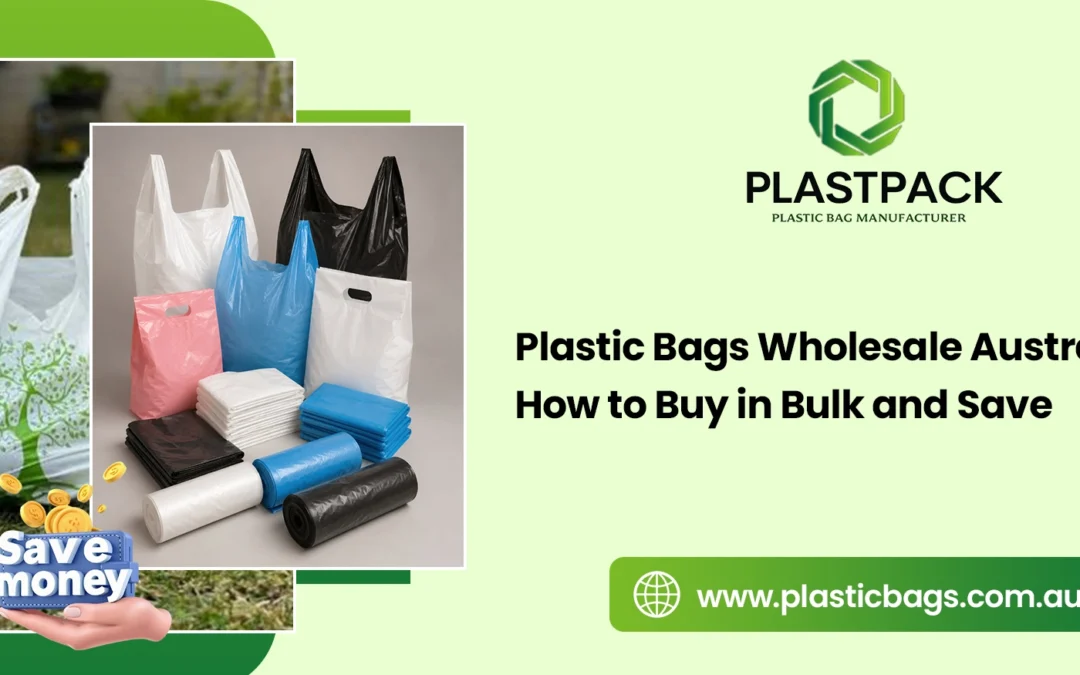
Businesses that buy plastic bags regularly already know the drill. An order runs out at the wrong moment, a reorder takes longer than expected, or a bag that worked fine last time arrives slightly different to what was specified. These are not minor frustrations. For a food production line, a warehouse dispatch operation, a medical facility or a retail floor, packaging supply gaps have real operational consequences.
Buying plastic bags wholesale is the approach most commercial buyers settle on, and for good reason. It reduces cost per unit, keeps consistent stock on hand, and, when you are working with the right supplier, takes the guesswork out of lead times. But getting it right means understanding what you actually need before you commit to a bulk order, and knowing what questions to ask before you sign off.
This guide covers the practical side of buying plastic bags wholesale in Australia: how to read specifications, which bag types suit which applications, what to expect from a manufacturer versus a reseller, and how Plastpack approaches bulk and custom supply from its Australian manufacturing facility.
Why Australian Businesses Buy Plastic Bags in Bulk
The unit economics are straightforward. Buying in smaller quantities more often costs more per bag and creates an ongoing reordering burden on whoever manages procurement. For operations using the same bag type across a consistent workflow, a well-sized wholesale order reduces cost per unit, consolidates procurement time and keeps production or dispatch moving without interruption.
There is also a supply reliability argument. Businesses that buy reactively, reordering only when stock runs low, are constantly exposed to supplier availability and lead time variation. A wholesale buyer with a few weeks of stock on hand is in a much stronger position operationally.
The key is getting the order right. Wholesale buying only produces those benefits if the bag specification, the order quantity and the supplier’s reliability all line up.
Getting the Specification Right Before You Order
Ordering the wrong bag in bulk is a worse outcome than ordering too little. A warehouse full of bags that do not fit the product, cannot be sealed correctly or fail under load is wasted spend and a logistical problem.
The main specification variables to nail down before placing a bulk order are film type, bag size, gauge and seal type.
Film type is the material the bag is made from. The two most common for commercial buyers in Australia are polyethylene and polypropylene.
Polyethylene (LDPE) bags are soft, flexible and slightly translucent. They are the standard choice for general-purpose packing, food-safe containment, carton lining and industrial storage. If you are buying plain poly bags for a high-volume application, LDPE is likely where you will start.
Polypropylene bags are stiffer, optically clearer and have a higher melt point. This makes them well-suited to product display packaging, food portioning and applications where heat sealing is involved. Plastpack’s polypropylene bag range is popular with food processors and retail buyers who need clarity and a clean presentation.
Bag size is expressed as Opening (mm) x Depth (mm). An undersized bag slows down packing lines. An oversized bag wastes film per unit across a high-volume run. If you have a physical sample of your product, measuring it and adding a working allowance gives you a reliable starting size. For custom applications, Plastpack can manufacture to a specific dimension.
Gauge (thickness) is expressed in microns (um). Light-duty containment and general packing typically sit in the 25um to 50um range. Heavy-duty industrial applications, clinical waste bags and drum liners operate at higher gauges, often 100um to 200um or above. Choosing correctly on gauge is particularly important for regulated or food-contact applications where material strength is non-negotiable.
Seal type affects how the bag is constructed and how it will be closed. Bottom seal bags (marked BS in Plastpack’s product listings) are made from a single continuous extrusion with a sealed base, giving a clean internal surface and performing well on automated heat-sealing equipment. Side seal bags are produced from lay flat tubing and are a standard option for general packing applications.
The Main Bag Categories and Where They Are Used
Different industries draw on different sections of the wholesale range. Here is a practical summary of the most commonly purchased categories.
Plain poly bags are the everyday workhorse across food production, manufacturing, warehousing and industrial settings. They are used for product wrapping, component containment, carton lining, dust protection and general transit packaging. The plain poly bag range covers small, medium and large formats with sizing specifications listed in full.
Polypropylene bags suit display and food-contact applications where optical clarity and sealability are the priorities. Retail food sellers, bakeries, confectionery producers and pharmaceutical packers regularly use this format. Plastpack’s polypropylene bags are available in standard sizes as well as gusseted options for bulkier products.
Press seal bags are resealable bags used for samples, small components, food portions, pharmaceutical products and retail display items. Available in a premium 50um, a heavy-duty 75um, and a write-on panel variant for labelling. The full press seal bag range is available to order directly.
Carry bags cover retail and checkout requirements. Singlet/checkout bags, retail carry bags in clear, black and white, and patch handle bags with a gusset for heavier loads are all part of the Plastpack carry bag range.
Courier bags are used by eCommerce retailers, fulfilment warehouses and logistics operators. Tamper-evident seals and strong construction are standard requirements. Plastpack’s courier bags are also available with custom print, a practical option for businesses moving significant parcel volume under a recognisable brand.
Industrial bags cover specialist requirements, including builders’ film, drum liners, garbage bags, pallet bags, pallet top sheets and pallet caps. For regulated waste applications, Plastpack also supplies clinical waste bags, incinerated waste bags and asbestos bags. These are specification-led products intended for commercial and institutional use within appropriate regulatory frameworks. See the industrial bag range for full product details.
Food packaging bags include vacuum bags, ice bags, bread bags, produce rolls, carton liners and general food-grade poly bags. All food-contact products in the Plastpack range are produced to food-grade material standards. The food packaging range is used by food manufacturers, processors, butchers, bakeries and fresh produce operations across Australia.
Manufacturer vs Reseller: Why It Matters When Buying Wholesale
A significant portion of wholesale plastic bag suppliers in Australia are resellers. They buy bags from a manufacturer, warehouse them and sell at a margin. There is nothing inherently wrong with that model, but it creates constraints that matter to commercial buyers.
A reseller cannot modify a standard product. If the bags in their catalogue do not match your size, gauge or seal requirement, your options are limited. Lead times are also at the mercy of their supplier’s schedule, not their own production capacity. Any quality inconsistency between runs is difficult to trace or resolve without direct access to the manufacturer.
A vertically integrated manufacturer operates differently. Plastpack extrudes its own film, prints it and forms bags in-house at its Werrington, NSW facility. That means bag specification, film quality and the production schedule are all within Plastpack’s direct control.
Plastpack also holds approximately 50 tonnes of film stock on site. When a standard or custom order comes in, the raw material is typically already available, and production can begin without delay. For buyers who have been caught out by long lead times from import-dependent suppliers, this stock position is a practical operational advantage.
This level of vertical integration is backed by more than 95 years of manufacturing history. Plastpack has been operating in the Australian market since 1928, originally as Churchill & Coombes, and continues to supply commercial buyers across food, medical, industrial, agricultural, retail and logistics sectors from the same Sydney facility. More about the business and its manufacturing capability is on the About Us page.
Custom Printed Bags at Wholesale Volume
For businesses moving bags at scale under a recognisable brand, custom printing converts a commodity purchase into a branding asset. A printed courier bag travelling through the delivery chain, a branded carry bag handed over a retail counter, or a printed press seal bag used for sample dispatch all serve a purpose beyond basic containment.
Plastpack offers custom printing on poly bags, carry bags, courier bags and press seal bags, with up to six-colour printing available in-house. Because the printing is done at the same facility where the bags are manufactured, there is no handoff between a bag supplier and a separate printer. Artwork guidance and colour matching assistance are available as part of the ordering process.
For buyers committing to a printed bulk run for the first time, requesting samples of the base bag before the print run is confirmed is a sensible step. Plastpack offers a sample service for this purpose.
What to Have Ready When You Enquire About a Wholesale Order
For standard products in the online range, orders can be placed directly through the Plastpack website. For custom sizes, made-to-specification runs or printed bag orders, a direct enquiry with the relevant details will produce a faster, more accurate quote.
Useful information to have ready:
- Bag type required (poly, press seal, carry, courier, industrial, food-grade or custom printed)
- Approximate bag dimensions in mm, or a physical sample of the product the bag needs to contain
- Gauge required in microns, or a description of the use case if you are unsure on thickness
- Seal type preference (bottom seal or side seal)
- Quantity required and how often you expect to reorder
- Whether custom printing is needed, including the number of colours and whether artwork is finalised
For buyers who are uncertain about specifications, Plastpack’s team can work through the requirements directly. Technical guidance on film type, gauge selection and seal type is part of what an experienced manufacturer-supplier can offer.
Frequently Asked Questions
What is the minimum order quantity for plastic bags wholesale at Plastpack?
Minimum quantities vary by product type. Standard stock items listed in the Plastpack online range are available in the quantities shown on the product pages. Custom-made bags have minimum run quantities that depend on the specification. Contact Plastpack directly to discuss your requirements and volumes.
Can plastic bags be made to a custom size?
Yes. Plastpack manufactures bags to specification, so custom sizing outside the standard catalogue range is achievable. Opening width, depth, gauge, seal type and colour can all be adjusted for a made-to-order run.
Are Plastpack’s bags food-safe?
Plastpack produces food-grade bags for direct and indirect food contact applications. The food packaging range includes vacuum bags, ice bags, carton liners, produce rolls and bread bags, all manufactured to food-grade material standards.
Can I order custom-printed bags in bulk?
Yes. Custom printing is available on poly bags, carry bags, courier bags and press seal bags, with up to six-colour printing in-house. Artwork assistance is available during the order process, and samples of the base bag can be arranged before a print run is confirmed.
What is the difference between polyethylene and polypropylene bags?
Polyethylene (LDPE) bags are soft, flexible and slightly translucent, suited to general packing, food-safe containment and industrial applications. Polypropylene bags are stiffer and optically clearer, with a higher melt point, making them well-suited to product display, food portioning and heat sealing. The right choice depends on the product being packed, how the bag will be sealed and whether visual clarity is a requirement.
How quickly can a bulk order be dispatched?
Because Plastpack holds substantial film stock on site, standard products and many custom orders can be produced and dispatched without extended lead times. The specific timeline for a custom or high-volume run will be confirmed at the time of the enquiry based on specification and quantity.
Does Plastpack supply clinical and medical-grade plastic bags?
Yes. Plastpack supplies clinical waste bags, incinerate waste bags, autoclave bags, specimen bags and sanitary liners, manufactured to the specification requirements of clinical and institutional buyers. Buyers should confirm compliance with the relevant Australian standards and guidelines for their specific application.
Where is Plastpack located, and does it ship nationally?
Plastpack manufactures at its facility in Werrington, New South Wales, and dispatches orders Australia-wide. The business has operated in Australia since 1928 and supplies commercial buyers across every state and territory.
Plastpack is an Australian plastic bag and plastic film manufacturer operating from Werrington, NSW. Formerly known as Churchill & Coombes, the business has supplied commercial buyers across food, medical, industrial, agricultural, retail and logistics sectors since 1928. For wholesale enquiries, visit plasticbags.com.au or contact the sales team directly.