
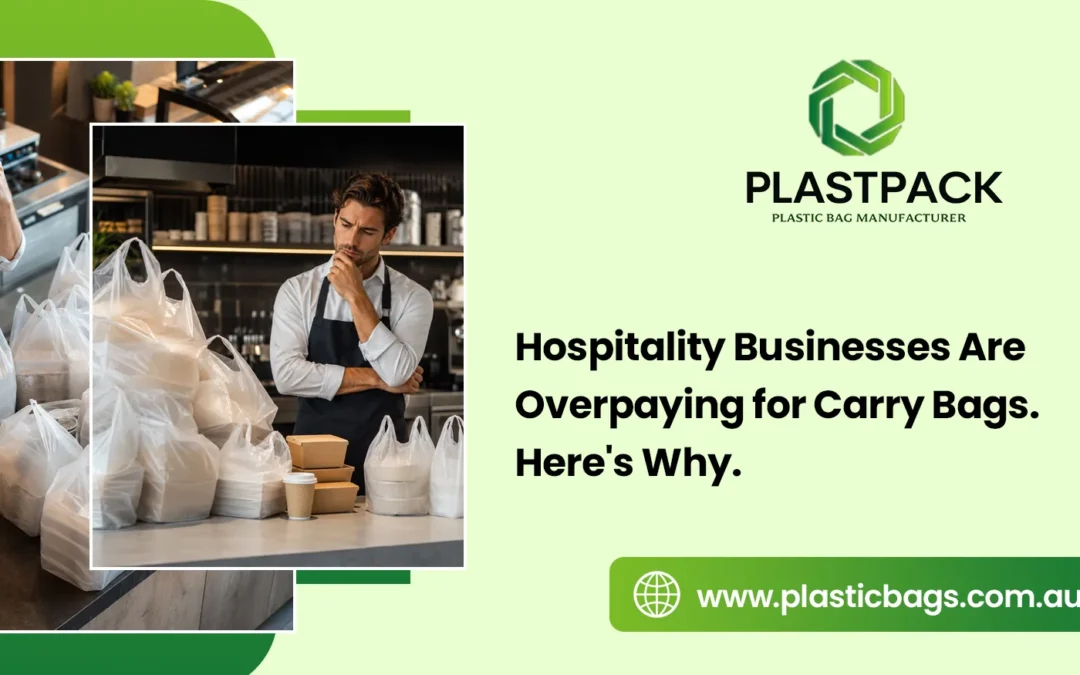
A carry bag is one of the few packaging items a cafe, takeaway, bakery or bottle shop hands over dozens or hundreds of times a day. At that frequency, even a small overpay per bag adds up to a real amount over the year. Most hospitality operators are not overpaying because carry bags are expensive. They are overpaying because of how they buy them: through extra margin layers, in the wrong specification, with branding added the expensive way, or in quantities that do not match how fast the bags move. Here is where the money leaks, and how to close each gap.
You are buying through a reseller, not the maker
A large share of carry bag suppliers in Australia are resellers and distributors. They hold stock that someone else produced, and every layer between the factory and your counter adds a margin. When you buy from a reseller, you pay for the manufacturer’s price plus the reseller’s cut on top. Buying direct from the manufacturer removes that layer. Plastpack extrudes its own film, prints it and forms the bags at its Sydney facility, so a hospitality buyer is purchasing from the maker rather than from a middle step. The full carry bag range is produced in-house.
You are paying for the wrong bag
Overpaying often starts with the wrong specification. A premium boutique carry bag is the right choice for a retail gift handover, but it is money wasted on a routine takeaway order that a compliant singlet or checkout bag handles perfectly well. Match the bag to the task. Singlet and checkout bags suit fast counter service and takeaway containers; retail carry bags in clear, black or white suit a branded handover, and patch handle bags with a gusset carry heavier or bulkier orders without failing.
Size is the other quiet cost. An oversized bag wastes film on every single unit, which adds up across thousands of handovers. An undersized bag fails or forces staff to double-bag, which doubles the cost of that sale. Sizing the bag to the container or order you actually hand over is one of the simplest ways to stop paying for film you throw away.
Your branding is being added the expensive way
Branded bags lift a venue’s presentation, but the way many operators get there costs more than it should. Buying blank carry bags from one supplier and sending them to a separate printer means two margins, two freight legs and two lots of handling, and the print is limited by working on a bag that has already been formed. A manufacturer that prints the film before the bag is formed applies the artwork cleanly, edge to edge, in up to six colours, as one job. If your venue hands over branded bags, ordering them as custom printed bags from the maker keeps the branding and the bag on a single invoice.
You are ordering in the wrong quantity
Quantity trips operators up in two directions. Order too little and you reorder constantly at higher unit rates, with the occasional stockout that forces a rushed, expensive top-up. Order too much, and you tie up cash and floor space, while printed stock can become a write-off the moment a menu, logo or venue name changes. The fix is a supplier that holds film and reorders quickly, so you can hit a sensible volume rate without carrying twelve months of bags in the store room. Plastpack holds roughly 50 tonnes of film on site and can hold your specification on file for fast repeat runs, and can hold excess stock for a customer where that suits the arrangement. The wholesale buying guide covers how to size a volume order against real usage.
You over-bought to solve a compliance scare
The single-use plastic bag bans across Australia caused a lot of confusion, and some venues responded by overspending on premium or eco-labelled bags without checking what the rule actually required. A compliant reusable singlet bag at the right gauge is usually the economical way to meet the requirement for counter service. Plastpack stocks reusable singlet bags at 38 microns produced to comply with the state plastic bag regulations, with biodegradable options available where they genuinely apply. The rules vary by state and have changed over time, so confirm the current requirement for where you trade, and the thickness guide explains how gauge relates to a compliant reusable bag.
Your supply is fragmented across too many suppliers
Hospitality venues rarely buy only carry bags. There are carton liners, produce rolls, bread bags, ice bags and food-grade poly bags in the mix as well. When those come from three or four different suppliers, you carry three or four minimums, pay freight several times over, and never build volume with any one of them. Consolidating carry bags and food packaging with a single manufacturer that makes both lets you order against one relationship, one dispatch and one set of terms. Plastpack’s food packaging range is produced to food-grade material standards alongside the carry bag range, which makes that consolidation practical for a food service operator.
How to stop overpaying?
- Buy carry bags from the manufacturer rather than a reseller holding third-party stock.
- Match the bag type and size to the job: singlet for takeaway, retail carry for a branded handover, patch handle and gusset for heavier orders.
- Brand through the same manufacturer instead of printing blank bags separately.
- Size orders to real throughput and use a held-stock supplier for quick reorders, rather than over-buying or constantly topping up.
- Confirm the compliant gauge for your state before ordering carry or checkout bags.
- Consolidate carry bags and food packaging with one maker to cut duplicate freight and minimums.
- Order a sample of the exact bag before committing to a run.
Work through that list and the overpay disappears without any drop in the quality of what you hand across the counter. The practical first step is to get a sample of the exact bag in the size and gauge your venue actually uses, then price the whole basket, carry bags and food packaging together, through one maker before your next reorder. Send your sizes, quantities and any artwork to Plastpack and the team can work through the right specification with you.
Frequently Asked Questions
Why are hospitality businesses overpaying for carry bags?
Usually, because of how they buy, not the price itself. Buying through resellers, in the wrong specification or size, with branding printed separately, or in quantities that do not match usage, all add cost. Buying direct from the maker in the right spec removes most of it.
What carry bag should a cafe or takeaway use?
A compliant singlet or checkout bag suits fast counter service and takeaway containers at the lowest sensible cost. Retail or boutique carry bags suit a branded handover, and patch handle bags with a gusset carry heavier or bulkier orders.
Are singlet or checkout bags still allowed under the plastic bag bans?
Reusable singlet bags produced at a compliant gauge are stocked for this purpose, while lightweight single-use shopping bags are restricted. The exact rule varies by state and has changed over time, so confirm the current requirement for where you trade.
Is it cheaper to buy printed carry bags or print them separately?
Buying printed carry bags from the manufacturer is usually cheaper. Printing blank bags separately adds a second margin, extra freight and handling, and limits the print on an already formed bag. An integrated maker prints the film before forming, in one job.
How do I get carry bags at a good rate without over-ordering?
Use a manufacturer that holds film stock and reorders quickly, so you can order a sensible volume without carrying months of stock. Plastpack holds around 50 tonnes of film on site and can keep your specification on file for fast repeat runs.