
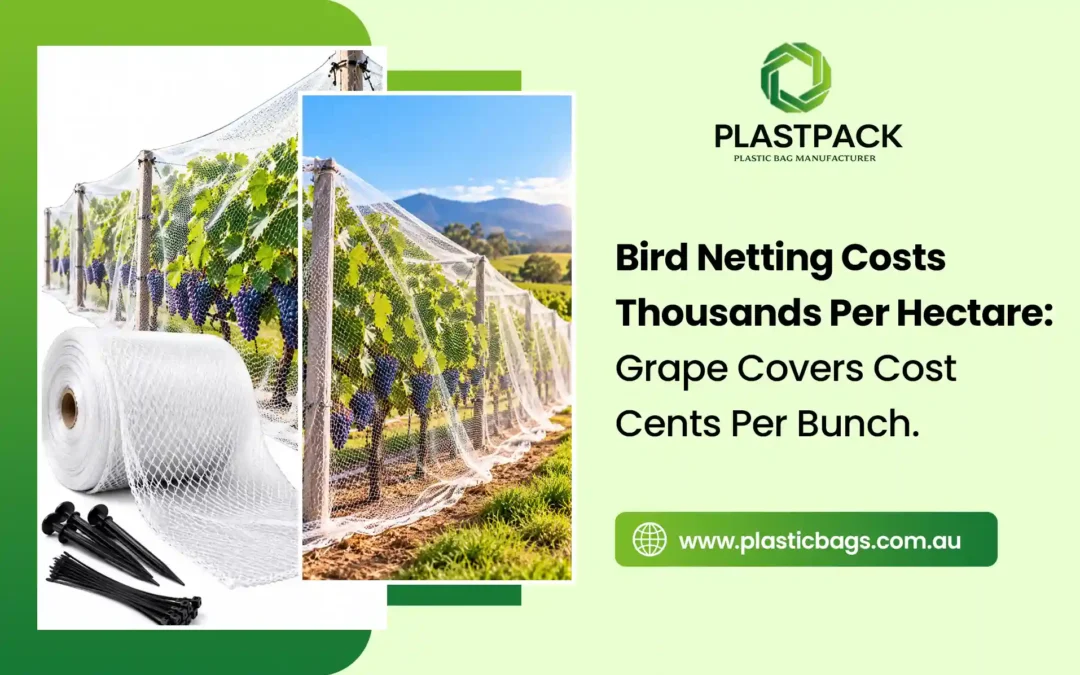
Birds will find your best fruit before you do. For vineyards, the question is never whether to protect the crop, it is how, and the two main answers sit at opposite ends of the cost scale. Bird netting protects the whole block but carries a major per-hectare outlay whether every vine needs it or not. Grape covers protect fruit one bunch at a time, so the cost tracks exactly what you choose to protect.
This article compares the two honestly, including where each one makes sense, so growers can work out which actually suits their vineyard. Plastpack (formerly Churchill & Coombes) manufactures grape covers in Australia and supplies vineyards, farms and horticultural operations, so the detail here comes from making the product.
Bird damage is a cost, not just a nuisance
A pecked bunch is not only lost fruit. Broken skins invite wasps, rot and disease into the canopy, which can spread beyond the fruit the birds actually touched. In a high-value block, even a modest percentage of damage late in the season, right before harvest when the sugar is up and the birds are keenest, comes straight off your yield and your return. Protecting fruit is a direct defence of revenue, which is why the method you choose, and what it costs, matters.
What bird netting actually costs
The headline price of a roll of net is only the start. The real cost of netting a vineyard is a per-hectare figure built from several parts: the netting itself across the whole block, the support structure, posts and wire it hangs from, the labour to install it each season, the labour to remove and retrieve it at the end, storage between seasons, and ongoing repairs as the net degrades in UV, tears, or snags wildlife. Over time the net also has to be replaced.
That is a substantial per-hectare investment, commonly running into the thousands of dollars per hectare once the structure and installation are counted, and it applies across the whole area whether or not every row carries fruit worth that spend. Netting is a fixed, block-wide cost.
What grape covers cost instead
Grape covers flip the economics. A cover goes over an individual bunch, so you are protecting fruit one bunch at a time, and the cost scales with the number of bunches you choose to protect rather than the hectares you own. At the material level a lightweight poly cover is a matter of cents per bunch, and you spend only on the fruit that justifies it.
That is the heart of the comparison. Netting asks you to pay for the whole block up front. Covers let you protect the high-value bunches that matter and leave the rest, so the spend follows the value. For table grapes, premium or show fruit, boutique blocks and selective high-value rows, covering the bunches that count can work out far more economical than netting the lot.
Grape covers protect against more than birds
Netting is mostly a bird barrier. A cover sitting over the bunch does more. Plastpack grape covers protect the fruit from birds and insects, from UV exposure and sunburn, and from rain and wind, right through to harvest. That multi-threat protection matters in an Australian season, where sunburn and a late rain event can damage a bunch just as surely as a flock of starlings.
A cover also creates a cleaner microclimate around the bunch and can extend hang time, letting fruit ripen on the vine with less risk. For growers chasing quality rather than just defending volume, that is protection netting alone does not provide.
Grape covers vs bird netting: which is right for your vineyard?
Neither method wins outright, and an honest answer depends on your operation.
Grape covers suit vineyards where the fruit is high value and the bunch count is manageable: table grapes, premium and show fruit, boutique and smaller blocks, trial rows, and any situation where you want to protect specific fruit rather than the whole area. They also suit growers who want protection from sun, rain and insects, not just birds. The trade-off is application labour, since each bunch is covered by hand as the fruit colours and ripens.
Bird netting suits large-scale wine grape blocks where covering every bunch by hand is not practical and blanket protection across many hectares is the goal. Some growers run both, netting the bulk of a block and covering specific high-value fruit.
The deciding questions are simple: how valuable is the fruit, how many bunches genuinely need protecting, and are birds your only threat. Where the answer points to selective, high-value, multi-threat protection, covers are usually the better spend.
Buying grape covers for your vineyard
Plastpack manufactures grape covers that are UV-stabilised, generously sized and lightweight, which keeps them quick to apply at the start of the season and remove at the end. They come in a range of sizes and can be made to a custom size to suit your bunches and your trellising.
As the manufacturer, we supply vineyards and horticultural operations in bulk across Australia, and because we hold around 50 tonnes of film on site, the material for most seasonal orders is already here. Grape covers sit within our wider agriculture bags range alongside mulch film for vineyard floor management, and growers packing table grapes for sale can add produce rolls to the same order. For larger seasonal volumes, our guide on buying in bulk covers how to set up a reliable supply.
To work out the right grape cover for your fruit, contact the Plastpack team with your bunch size, quantity and the threats you are protecting against, and we will recommend the right cover and size.
Frequently Asked Questions
How much do grape covers cost per bunch?
A grape cover is a small per-bunch cost at the material level, often a matter of cents, and the figure depends on the cover size and the quantity ordered. Because you cover only the bunches you choose, the spend scales with the fruit you protect rather than the hectares you own. Contact us for a quote.
Are grape covers cheaper than bird netting?
They have a very different cost structure. Netting is a large fixed cost per hectare across the whole block, while covers scale with the number of bunches you protect. For table grapes, premium fruit and selective high-value protection, covers often work out more economical.
What do grape covers protect against?
Plastpack grape covers protect bunches from birds and insects, from UV exposure and sunburn, and from rain and wind through to harvest. That is broader protection than bird netting, which mainly guards against birds.
Are grape covers suitable for large vineyards?
They are best suited to table grapes, premium fruit, boutique blocks and selective high-value rows, because each bunch is covered by hand. Large-scale wine blocks may still use netting for blanket coverage, or run a mix of both.
Can I buy grape covers in bulk or in custom sizes?
Yes. We supply grape covers in bulk across Australia and, as the manufacturer, produce custom sizes to suit your bunches and trellising, with UV-stabilised film held on site to keep seasonal lead times short.