
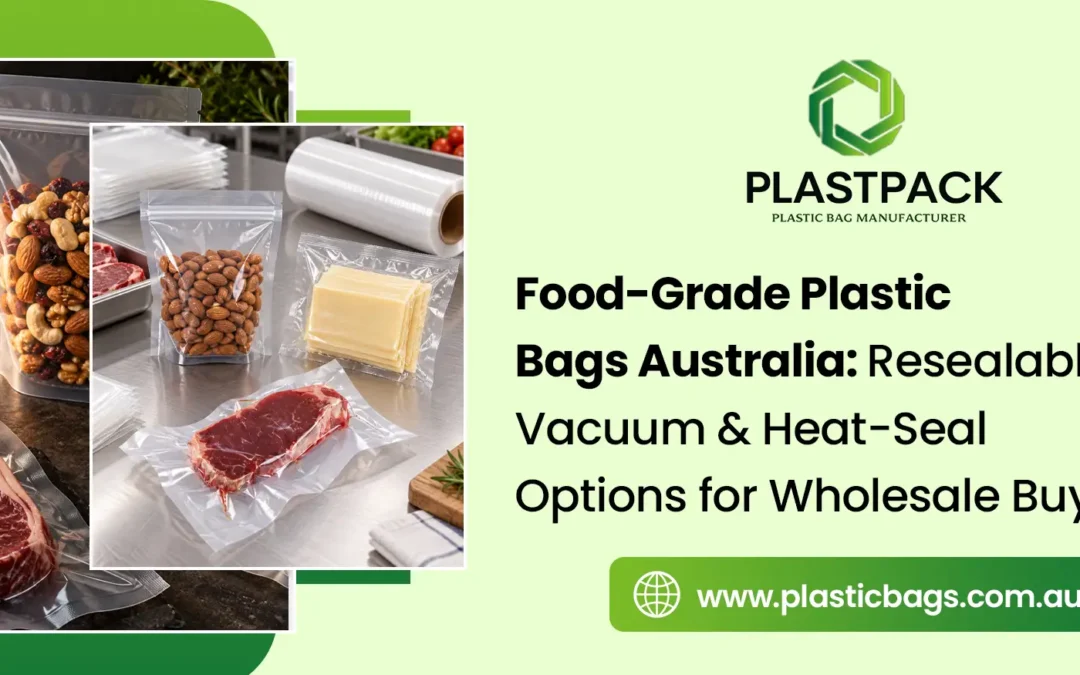
For any food business, the bag is not a wrapper. It is part of the food safety chain. The wrong film, the wrong seal or a bag that is not made for food contact turns into a hygiene problem, a shelf-life problem or a compliance problem. The right food-grade bag protects the product, holds up through packing and cold storage, and matches how you actually seal and handle the food.
This guide sets out the three main food-grade formats Australian buyers choose between, resealable, vacuum and heat-seal, and how to pick the one that fits your product and your line. Plastpack (formerly Churchill & Coombes) manufactures food-grade packaging at its Australian factory, extruding the film, printing it and forming the bags in-house, so the guidance here comes from making food-contact packaging rather than reselling it.
What makes a plastic bag food grade?
A food-grade plastic bag is one made from film that is safe for contact with food, manufactured to the relevant Australian food safety requirements. The key point for buyers is that a general poly bag is not automatically food-grade. Food-grade bags are produced from virgin food-grade film rather than recycled remill, so there is no risk of contaminants carried over from a previous use.
It also helps to know the difference between direct and indirect food contact. Direct contact means the bag touches the food, such as a bag holding loose produce or a meat portion. Indirect contact means the bag protects food that is already wrapped, or lines a carton that holds packaged product. Plastpack produces food-grade bags for both direct and indirect contact, all manufactured to food-grade material standards. When you enquire, tell us the food and how it is packed, and we supply film that is correct for the application.
Resealable food-grade bags
Resealable food-grade bags use a press seal closure that opens and recloses by hand, with no heat or tape. They suit any food that is accessed more than once: portioning, dry goods such as nuts, spices and coffee, samples, and resealable retail packs where the customer opens and recloses the bag at home.
Plastpack’s resealable press seal bags come in a 50 micron standard for light contents and general storage, and a 75 micron heavy-duty film for heavier or sharper contents, plus a write-on panel option for recording batch numbers or dates by hand. For food use, the food-grade film is specified at the point of order, so the closure gives you convenience without compromising the food-contact requirement.
Vacuum bags for food
Vacuum bags extend shelf life by removing air from around the product before sealing, which slows spoilage and protects flavour and colour. They are the format for meat, fish, cheese, bulk portions and anything headed for cold storage or longer holding.
The right vacuum bag depends on your machine. Plastpack supplies co-extruded vacuum bags with a smooth wall suited to chamber sealers, and embossed or crimped bags with a textured channel that draws air out on external sealers. Choosing the bag to match the machine is what gives a clean, reliable vacuum, so tell us the sealer you run, and we will match the bag to it.
Heat-seal food bags
Heat-seal food bags are open-top bags filled and then sealed once with a heat sealer, which suits high-volume single-pack jobs on a line. This is the format for bread, fresh produce, bulk repackaging and carton lining, where speed of filling and a permanent seal matter more than reopening.
Plastpack’s plain poly bags in food-grade LDPE are soft, flexible and heat-sealable, and open fully at the top for fast loading. For bakeries, bread bags and produce rolls keep baked and fresh product presentable at the point of pack or sale, and layflat tubing can be cut to any length when a stock size does not fit. Carton liners line boxes on the packing line to keep product clean and contained through storage and transport.
Resealable vs vacuum vs heat-seal: which food-grade bag do you need?
The choice comes down to how the food is stored and how it is sealed.
Choose a resealable bag when the food is opened and reclosed more than once, such as dry goods, portioned ingredients, samples and resealable retail packs. It seals by hand with no equipment.
Choose a vacuum bag when the priority is shelf life, such as meat, fish, cheese and bulk portions for cold storage. It needs a vacuum sealer, and the bag has to match the machine.
Choose a heat-seal bag when you are packing in volume with a single, permanent seal, such as bread, fresh produce, bulk repackaging and carton lining. It needs a heat sealer and fills fast.
A quick way to decide: repeated access points to resealable, shelf-life extension points to vacuum, and high-volume single-seal packing points to heat-seal. If a product spans more than one of these, tell us how it moves through your operation, and we will help you settle on the format.
Choosing thickness for food-grade bags
Thickness is measured in microns, and the right gauge depends on the weight of the product and how the bag is handled. Light containment and general packing usually sit in the lower range, while heavier portions, sharper contents and freezer storage call for a thicker film that resists splitting and stays flexible when cold. Vacuum bags in particular need enough wall strength to hold the vacuum without pinholing.
As the manufacturer, we can match the gauge to the food and the handling rather than leaving you to force a product into a stock thickness. If you are not sure, our team can recommend a gauge based on the product weight and how it is stored.
Buying food-grade plastic bags wholesale
For food businesses using bags in volume, ordering direct from the maker keeps the supply consistent and the food-contact spec correct on every batch. Because the printing and bag forming happen in the same facility, there is no handoff between a bag supplier and a separate printer, and the batches stay consistent. We hold around 50 tonnes of film on site, so the material for most orders is already here.
When a stock size does not suit the product, food packaging is made to your size, thickness and format, with up to six-colour printing in-house for branding, product information or handling instructions, and samples available before you commit to a run. Browse the full food-grade food packaging range to see the formats, and for guidance on locking in a bulk supply, our guide on buying plastic bags wholesale is a useful starting point.
To match food-grade bags to your product, contact the Plastpack team with the food, how it is sealed and your volume, and we will recommend the right format, film and size.
Frequently asked questions
What makes a plastic bag food grade?
A food-grade bag is made from virgin food-grade film, manufactured to the relevant Australian food safety requirements and suitable for food contact. A general poly bag is not automatically food-grade, so confirm the material spec for your application before use.
What is the difference between resealable, vacuum and heat-seal food bags?
Resealable bags open and reclose by hand for repeated access. Vacuum bags remove air to extend shelf life and need a vacuum sealer. Heat-seal bags are filled and sealed once with a heat sealer for high-volume single-pack jobs.
Are Plastpack’s food-grade bags suitable for direct food contact?
Yes. We produce food-grade bags for both direct and indirect food contact, manufactured to food-grade material standards. Tell us the food and how it is packed when you enquire, and we supply the correct bags for the application.
What thickness food-grade bag do I need?
It depends on the product weight and how it is handled. Light containment sits in the lower micron range, while heavier portions, sharp contents and freezer storage need a thicker film that resists splitting and stays flexible when cold.
Can I buy food-grade plastic bags wholesale or in custom sizes?
Yes. We supply food-grade bags in bulk across Australia and, as the manufacturer, produce custom sizes, thicknesses and formats to order, with film held on site to keep lead times short.