
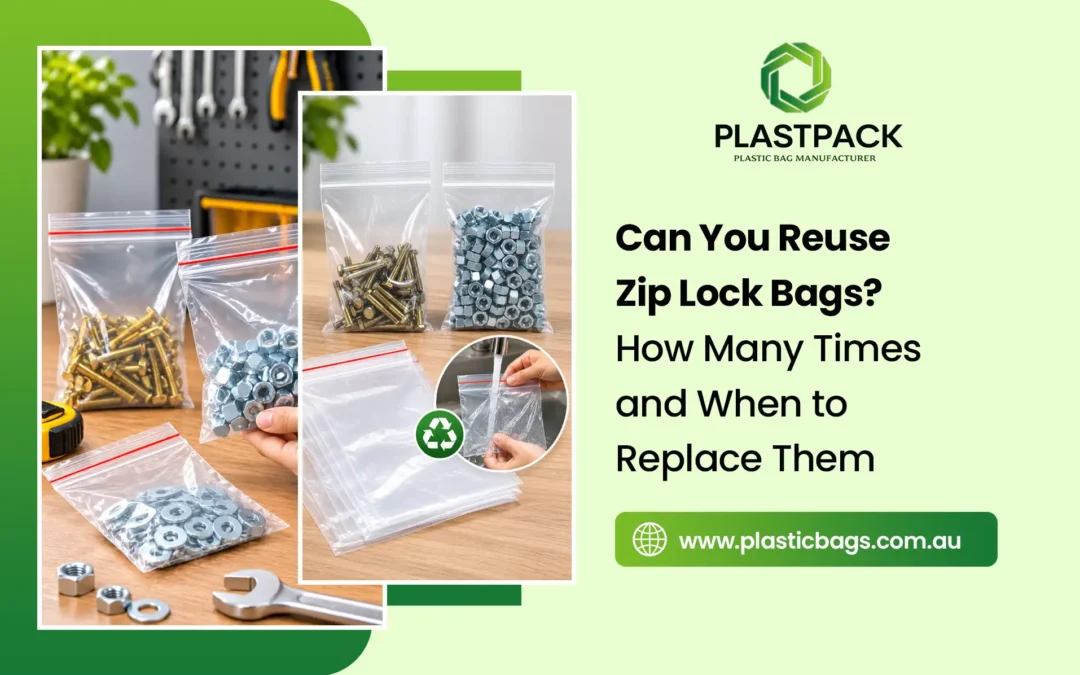
Zip lock bags look disposable, but a good one is built to do a lot more than one job. Whether you should reuse one comes down to two things: what was in it last, and how well it is holding up. Get both right and a single bag can serve many times over. Get them wrong and you are trading a few cents of saving for a contamination risk that is not worth it.
This page answers the practical questions: can you reuse zip lock bags, how many times, when to stop, and how to choose a bag built for reuse in the first place. Plastpack (formerly Churchill & Coombes) manufactures resealable press seal and zip lock bags in Australia, so the guidance here comes from making the product.
Can you reuse zip lock bags?
Yes, in most cases you can reuse a zip lock bag, as long as it is cleaned and dried properly and did not hold anything that makes reuse unsafe. The bags are made from durable plastic film that stands up to washing, and the resealable closure keeps working across repeated uses until the bag itself wears out.
The best candidates for reuse are bags that held dry or shelf-stable goods: snacks, dry ingredients, small parts, stationery and the like. These rarely leave residue and wipe out easily. Bags that held wet, oily or sticky contents can be reused too, but they take more cleaning and give out sooner.
How many times can you reuse a zip lock bag?
There is no fixed number, because it depends on the bag and what you put in it. As a general guide, a bag used for clean, dry contents can be reused many times before it shows wear, while a bag that held messy or moist contents will last fewer cycles. The single biggest factor is the thickness of the film. A light bag tires quickly, whereas a heavy-duty resealable bag holds its seal and resists tearing across far more uses, which is why businesses that plan to reuse choose a heavier gauge from the start.
In short, reuse the bag until it stops sealing or stops coming clean. Until then it is doing its job.
When you should not reuse a zip lock bag
This is where judgement matters, especially around food. Do not reuse a zip lock bag if it held any of the following:
Raw meat, poultry, fish or eggs. These carry bacteria that a quick rinse will not reliably remove, so the bag should be used once and replaced.
Common food allergens. Even a trace left in a bag can contaminate the next food and cause a serious reaction, so a bag that held an allergen should not be reused for other foods.
Non-food or chemical contents. A bag that held cleaning products, parts with residue or any non-food item should never then be used for food.
Microwave or steam cooking bags. Bags made for heating are intended for single use and should not be refilled.
If any of these applies, replace the bag rather than risk it.
When to replace a zip lock bag
Even a bag that only ever held safe contents eventually wears out. Replace it when you see any of these signs: it is torn, punctured or has a hole, the film has gone cloudy or discoloured, it is stretched or bulging out of shape, it holds an odour you cannot wash out, or the seal no longer closes firmly. A bag that will not seal has lost the one thing that makes it useful, so at that point it is finished.
How to clean a zip lock bag for reuse
For a bag that is safe to reuse, the method is simple. Empty out any food particles, add warm water and a small amount of dish soap, zip it closed and swish it around, then rinse well with clean water. The important step is drying: let the bag air dry completely, inside and out, before you use it again. A bag put away damp can grow mould and undo the point of cleaning it. For bags that only held dry goods, a shake-out and a wipe is often all that is needed.
For businesses: reuse, food safety and the right bag
In a commercial setting, reuse is not just a cost question, it is a food safety one. Food businesses operate under food safety requirements, and for direct food contact many choose single-use bags to control cross-contamination, keeping reusable bags for non-food tasks such as storage, parts, kitting and organising. If you handle food, let your food safety program decide where reuse is appropriate rather than treating every bag as reusable by default. Where food contact is involved, use food-grade resealable bags made for the purpose.
The economic side is straightforward. A thin bag reused a few times and a heavy-duty bag reused many times can cover the same work, but the heavier bag does it more reliably and for longer. For any operation that plans to reuse, a sturdier gauge pays for itself in fewer failures and replacements.
Choosing reusable zip lock bags
If reuse is part of how you work, the bag you start with matters more than any cleaning trick. Our heavy-duty 75 micron zip lock bags are built for repeated use, with a thicker wall that holds its seal and resists splitting across many cycles, which suits parts, components and anything handled often. Where you relabel a bag between uses, our write-on panel press seal bags give you a clean surface to update the contents by hand each time.
We manufacture the full zip lock and press seal range in Australia and supply it in bulk, so businesses buying reusable resealable bags can order the gauge and size that fits the job. For larger volumes, our guide on buying plastic bags wholesale covers setting up a steady supply. To match the right reusable bag to your use, contact the Plastpack team with your contents, size and quantity.
Frequently Asked Questions
Can you reuse zip lock bags?
Yes, in most cases, as long as the bag is cleaned and dried properly and did not hold raw meat, fish, eggs, allergens or non-food items. Bags that held dry goods are the easiest and safest to reuse.
How many times can you reuse a zip lock bag?
There is no set number. A bag used for clean, dry contents can be reused many times, while messy or moist contents shorten its life. Heavier gauge bags reuse far more times than thin ones before wearing out.
When should you not reuse a zip lock bag?
Do not reuse a bag that held raw meat, poultry, fish, eggs, food allergens, chemicals or non-food items, or one made for microwave or steam cooking. In those cases, use the bag once and replace it.
When should you replace a zip lock bag?
Replace it when it is torn, cloudy, stretched or bulging, holds an odour you cannot wash out, or the seal no longer closes firmly. A bag that will not seal has lost its purpose and should be retired.
Which zip lock bags are best for reuse?
Heavy-duty, thicker gauge resealable bags are best for reuse, as they hold their seal and resist tearing across many cycles. For food contact, choose food-grade bags and follow your food safety requirements.