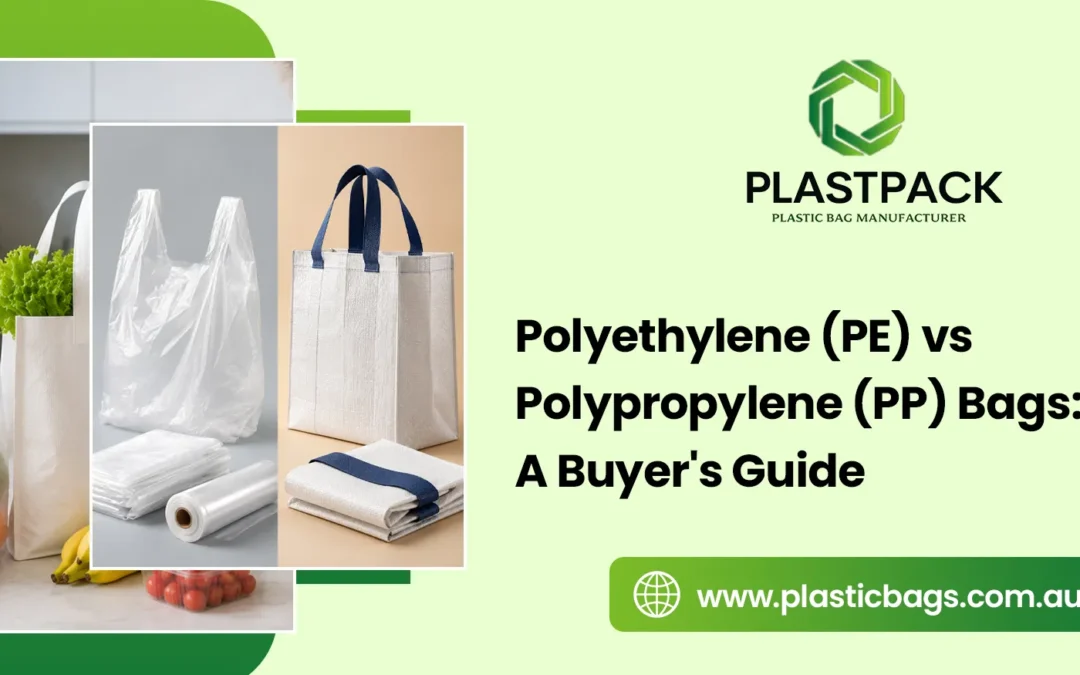
Polyethylene and polypropylene sit right next to each other on most spec sheets, and they are easy to mix up. Both are clear-ish plastic films, both bag up product, and both turn up across food, retail, medical and industrial packaging. But they behave very differently, and picking the wrong one shows up as a bag that cracks in the cold, a display pack that looks cloudy on the shelf, or a liner that splits under load.
Here is the quick version for buyers. Polyethylene (PE) is soft, flexible and tough, which suits everyday packing, liners, freezer use and anything heavy or sharp. Polypropylene (PP) is stiffer and much clearer, with better heat and chemical resistance, which suits retail display, presentation packs and dry food packaging. Choose PE when flexibility and durability matter most. Choose PP when clarity, rigidity or heat resistance are the priority.
This guide breaks that down properly so your procurement, production and warehouse teams can match the right film to each job.
PE vs PP bags: the short answer
PE and PP are both polyolefin plastics, but a small difference in their molecular structure gives them very different characters. PE is the flexible, forgiving workhorse. It stretches, absorbs impact and stays usable in the freezer. PP is the crisp, clear performer. It holds its shape, resists heat and chemicals, and shows a product off with a glass-like finish. Neither is better outright. They are better at different things, and the right choice comes down to what the bag has to do.
What is polyethylene (PE)?
Polyethylene is the most widely used plastic in packaging. It is soft and slightly waxy to the touch, flexible, and tough enough to resist tearing and puncturing under load. It also stays flexible in cold conditions, which is why it is the standard for freezer and cold-store use where a stiffer film would crack.
PE comes in a few grades, and each suits a different job. Low-density polyethylene (LDPE) is soft and clear for its class, high-density polyethylene (HDPE) is stiffer and stronger for its weight, and linear low-density polyethylene (LLDPE) adds extra puncture and tear resistance. Most everyday poly packaging, including plain poly bags, bin liners, layflat poly tubing and press seal bags, is made from PE. The trade-off is clarity: PE has a slight haze, so it protects and contains well but does not present a product as sharply as PP.
What is polypropylene (PP)?
Polypropylene has a small side branch on its molecular chain that stops the film from packing and moving as freely as PE. That single difference gives PP its defining traits: it is stiffer, crisper and noticeably clearer, with a higher melting point and stronger resistance to heat and chemicals. High-clarity PP and BOPP films give an almost glass-like finish, which is why PP is the go-to for retail display and presentation packaging where the product has to be seen clearly.
The trade-off runs the other way for PE. PP is more rigid and less forgiving, so it can crack or become brittle in the cold and does not tolerate punctures as well. It springs back rather than stretching. For clear, structured packs that need to look sharp and hold their form, though, polypropylene bags are hard to beat.
PE vs PP bags: side-by-side comparison
| Property | Polyethylene (PE) | Polypropylene (PP) |
| Feel | Soft, waxy, quiet scrunch | Crisp, stiff, crackly, springs back |
| Flexibility | High | Lower, more rigid |
| Clarity | Translucent, slight haze | High clarity, glass-like |
| Tear and puncture resistance | High | Lower, can crack |
| Cold and freezer tolerance | Good, stays flexible | Can turn brittle when cold |
| Heat resistance | Lower | Higher |
| Chemical resistance | Good | Excellent |
| Moisture and vapour barrier | Good | Very good |
| Recycling code | 2 and 4 | 5 |
| Best suited to | Produce, freezer, liners, heavy or sharp loads, general packing, tubing | Retail display, presentation, dry food packs, heat or chemical applications |
How to tell PE and PP bags apart?
Your team can identify the two by feel in a second. PE feels soft and waxy, gives when you pull it, and scrunches quietly into a ball. PP feels crisp and stiff, springs back into shape, crackles when handled, and looks much clearer. If it stretches and stays quiet, it is PE. If it snaps back and looks glassy, it is PP.
Which should you choose?
The right material is decided by what matters most for the job. Here is how the choice usually falls.
Choose PE when flexibility and durability come first
PE is the answer for the bulk of everyday commercial packaging. Its softness and tear resistance handle heavy, awkward or sharp contents without splitting, and it stays flexible in cold and freezer conditions. Reach for PE for produce and freezer bags, carton and drum liners, general product wrapping and transit packaging, and any application where the bag needs to give rather than hold rigid. It is also the material for courier bags and mailing satchels that have to survive the parcel network, and for custom-sized packing cut from layflat tubing.
Choose PP when clarity, heat or chemical resistance come first
PP earns its place where presentation and performance matter more than flexibility. Its high clarity makes it the standard for retail display packs, gift and boutique packaging, and dry food such as confectionery, snacks and baked goods where customers want to see the product. Its heat and chemical resistance also suit applications that a softer film could not handle, including certain medical and laboratory uses. Where a clean, structured, see-through pack is the goal, PP is the material to specify.
By sector, in short
Food operations lean on PE for produce, freezer and general food packing, and on PP for clear display packs of dry goods. Retail uses PP for high-clarity presentation and PE for carry and checkout duty. Medical and clinical settings choose based on the standard and procedure, with PP’s heat and chemical resistance suiting some applications and PE suiting others. Industrial and logistics operations rely mostly on PE for liners, heavy-duty packing and transit protection. If clarity is your main question, our transparent plastic packaging bags guide goes deeper on choosing clear film for display.
Recyclability of PE and PP bags
Both materials are recyclable, but not through the same stream, and that distinction matters when you set up waste separation. PE carries recycling codes 2 (HDPE) and 4 (LDPE), and as a soft plastic it goes through dedicated soft plastics collection rather than the kerbside bin. PP carries code 5 and is recycled through its own stream. Keeping the two apart, clean and dry, gives each the best chance of being recovered.
The bigger environmental gain often comes at the specification stage. Choosing the correct film and thickness for the job means fewer failed bags and less wasted material overall. Where a genuinely lower-impact option suits the application, biodegradable and degradable lines are available, and we only describe a product as recyclable or biodegradable where that specific product actually is.
Getting the specification right
Material is one of three settings that decide how a bag performs. The other two are thickness and format. Thickness, measured in microns, should match the load rather than defaulting to the heaviest available, because over-specifying wastes film and under-specifying causes failures. Format then shapes how the bag is built and closed, from bottom-seal and side-seal poly bags to resealable press seal and clear display packs. Getting all three right is where a made-to-spec order pays off, and it is worth a quick conversation before a large run.
Buying PE and PP bags from a manufacturer
Most suppliers ranking for these products hold whatever a third party produced, which limits the sizing, thickness and finish you can get. Plastpack works differently. We extrude our own polyethylene film, print it and form PE bags in-house at our Australian facility, with a heritage in the trade dating back to 1928, and we supply polypropylene bags for the clarity and presentation jobs PE cannot match. That means you can source both materials from one manufacturer and get honest guidance on which one actually fits your application, plus samples to evaluate before you commit.
Because we control the process from film to finished bag, we can produce PE to the exact thickness, size, colour and seal your operation needs, in up to six-colour print. Browse the full plastic bags range, see the polypropylene options, or ask our team to help you specify the right material and gauge for the job.
Frequently asked questions
What is the main difference between PE and PP bags?
PE is soft, flexible and tough, which suits everyday packing, liners and freezer use. PP is stiffer and much clearer with higher heat and chemical resistance, which suits retail display and presentation.
Which is clearer, PE or PP?
PP is clearer. Polypropylene, and especially BOPP film, gives a crisp, glass-like finish that shows products well, while PE has a slight haze. For high-clarity retail display, PP is the usual pick.
Are PP bags stronger than PE bags?
PP has higher rigidity and tensile strength, but PE resists tearing and puncturing better and stays flexible in the cold. PP can become brittle at low temperatures, so the stronger choice depends on the load and conditions.
Can PE and PP bags hold food?
Both can be made to food-contact standard. PE suits produce, freezer and general food packing, while PP suits clear display packs for dry foods such as confectionery, snacks and baked goods.
Are PE and PP bags recyclable?
Both are recyclable, but through different streams. PE carries codes 2 and 4 and goes through soft plastics collection, while PP carries code 5. Keep them separated and clean for the best chance of recovery.