
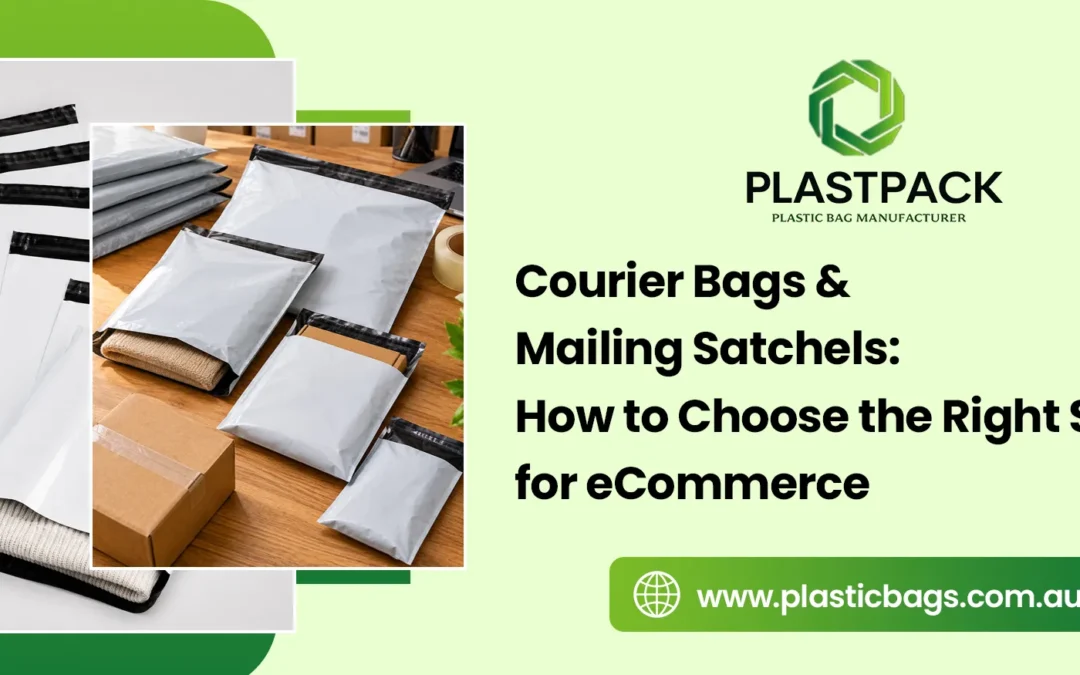
Getting courier bag size right is one of those small decisions that quietly shapes your fulfilment costs. Pick a satchel that is too big, and you pay for dead space and void fill on every order. Pick one that is too tight, and you deal with split seams, failed seals and returns. For a business shipping hundreds or thousands of parcels a month, the size you standardise on is a genuine operational choice, not an afterthought.
This guide walks through how to size a courier bag for real eCommerce shipping, what each size class actually suits, and where a custom-made satchel earns its place. Plastpack has manufactured plastic bags for Australian businesses since 1928, and we supply courier satchels to online sellers, warehouses and fulfilment operations across the country, so the advice here comes from what works in practice.
The quick way to size a courier bag
Measure your product packed and ready to post, then add roughly 20 to 40 mm to both the width and the length. That headroom lets the bag sit flat over the contents and gives you clean film above the item to fold and seal. A satchel packed right to the edge of the seal strip will not close reliably, and that is where most seal failures start.
As a rule of thumb, size up for soft goods that need a little give, and size down where you are chasing lower freight on light parcels. The goal is a snug bag with just enough room to seal, not a loose one with air and slack.
Why the right size matters more than sellers think?
Couriers do not only charge by weight. Most Australian carriers price by whichever is greater, the actual weight or the cubic (dimensional) weight worked out from the parcel’s size. An oversized satchel stuffed with a small item can tip a parcel into a higher pricing bracket for no reason other than trapped air and slack film.
Across a single order, the difference is small. Across a monthly shipping volume, it adds up to a line on your P and L that never needed to be there. Matching the bag closely to the product keeps parcels in the lowest sensible freight bracket, reduces the void fill you buy to stop items rattling around, and gives a tidier parcel that handles better through the network.
Courier bag sizes and what each one suits
Australian courier satchels are commonly grouped by the parcel weight they carry. Plastpack holds standard courier bags in 500g, 1kg, 3kg and 5kg classes, and produces custom sizes to order. Here is how the common sizes line up with typical eCommerce products.
500g satchels (typically around 150 x 230 mm) suit jewellery, cosmetics, phone accessories, small electronics, single documents and one lightly folded garment. This is the workhorse for small, high-volume sellers.
1kg satchels (typically around 240 x 320 mm) take books, a single t-shirt or garment, A4 documents, magazines and photographic prints. A strong default for apparel sellers shipping one item per order.
3kg satchels (typically around 310 x 400 mm through to 350 x 480 mm) hold multiple folded garments, knitwear, small homewares and multi-item subscription orders.
5kg satchels (typically around 400 x 500 mm and up) are built for bundled apparel, bedding sets, soft furnishings and larger multi-piece orders.
Oversized and custom satchels (500 mm and beyond) cover doonas, pillows, large soft goods and anything that will not sit inside a standard size. These are where a made-to-measure bag often makes the most sense.
Treat these dimensions as a starting point. The right size always comes back to your specific product measured with its packing, not the label on the size class.
Choosing the right thickness for your contents
Size is only half the decision. Gauge, the thickness of the film measured in microns, decides whether the bag survives the trip. Plastpack courier satchels are made from co-extruded LDPE film in a standard 65 micron gauge, with custom thicknesses available on request.
For soft, light contents such as folded clothing, 65 micron is usually plenty. For heavier parcels, or anything with a firm edge or corner that can press into the film during handling, a thicker gauge protects against splitting and seal failure. If you are unsure, tell us what goes inside and how it is handled, and we will recommend a gauge that holds up.
When a stock size does not fit: custom-made satchels?
Most sellers force their product into the nearest stock satchel and accept the slack. If you ship the same SKU in volume, there is a better option. As the manufacturer, Plastpack can produce a courier bag made to your exact product dimensions, so the bag fits the item rather than the other way around.
For a repeat carton, garment or boxed line, a bag sized to that product removes the void fill, drops the parcel into a tighter freight bracket and gives a cleaner presentation on every order. Over thousands of shipments, a satchel that fits properly pays for itself. Because we extrude our own film, print it and form the bags in-house, and hold around 50 tonnes of film on site, we can turn made-to-spec courier bags around without the handoffs a reseller has to manage. If you have a set product, send us the dimensions or the weight, and we will match the bag.
Branding your satchels
The courier bag is the first thing your customer sees at the door, which makes it prime space for your brand. Plastpack prints custom-printed courier bags in-house in Pantone or CMYK, with up to six-colour printing for your logo, return address or handling text. The film is UV-stabilised, and we print with UV-resistant inks, so bags and branding hold their colour through storage and transit.
Custom-printed runs carry a lead time of around 8 to 12 weeks, so plan your artwork, size and quantity early and contact us for a quote well ahead of when you need stock.
Buying courier bags in bulk for fulfilment
Once you have settled on a size and gauge, buying in volume keeps your per-order packaging cost down and your dispatch consistent. We supply courier bags in bulk to online sellers, warehouses and fulfilment teams Australia-wide, in standard sizes from stock and in custom runs. If you are building out a full packaging spec, our guide on buying plastic bags wholesale covers how to lock in a reliable supply.
Still deciding whether a satchel or a different mailing format is right for your goods? Our breakdown of courier bags versus satchels walks through the terminology and the format choice. And for small items that need to be organised or protected inside a satchel, our resealable press seal bags keep accessories and components together in transit.
To size and spec your courier bags for your product range, contact the Plastpack team and we will help you choose the right size, gauge and print for your fulfilment.
Frequently asked questions
What size courier bag do I need for eCommerce?
Measure your product packed for shipping, then add about 20 to 40 mm to the width and length so the bag seals cleanly. Match that to the nearest satchel size, sizing up for soft goods and down where you want to keep freight costs low.
What are the standard courier bag sizes in Australia?
Courier satchels are commonly grouped by parcel weight into 500g, 1kg, 3kg and 5kg classes, with oversized options above that. Plastpack holds these standard sizes in stock and manufactures custom sizes to order for products that do not fit a standard class.
Does courier bag size affect shipping cost?
Yes. Most carriers charge on the greater of actual weight or cubic weight, so an oversized bag with trapped air can push a parcel into a higher freight bracket. A snug bag keeps parcels in the lowest sensible bracket and cuts the void fill you need to buy.
What thickness should a courier bag be?
Plastpack courier bags come in a standard 65 micron LDPE film, which suits most soft and light contents. For heavier goods or items with firm edges, a thicker custom gauge resists splitting and seal failure through handling.
Can I order courier bags in a custom size and printed with my logo?
Yes. As the manufacturer, Plastpack produces courier bags made to your exact dimensions and prints them in-house with up to six-colour printing. Custom-printed runs have a lead time of around 8 to 12 weeks, so contact us early with your size, quantity and artwork.