
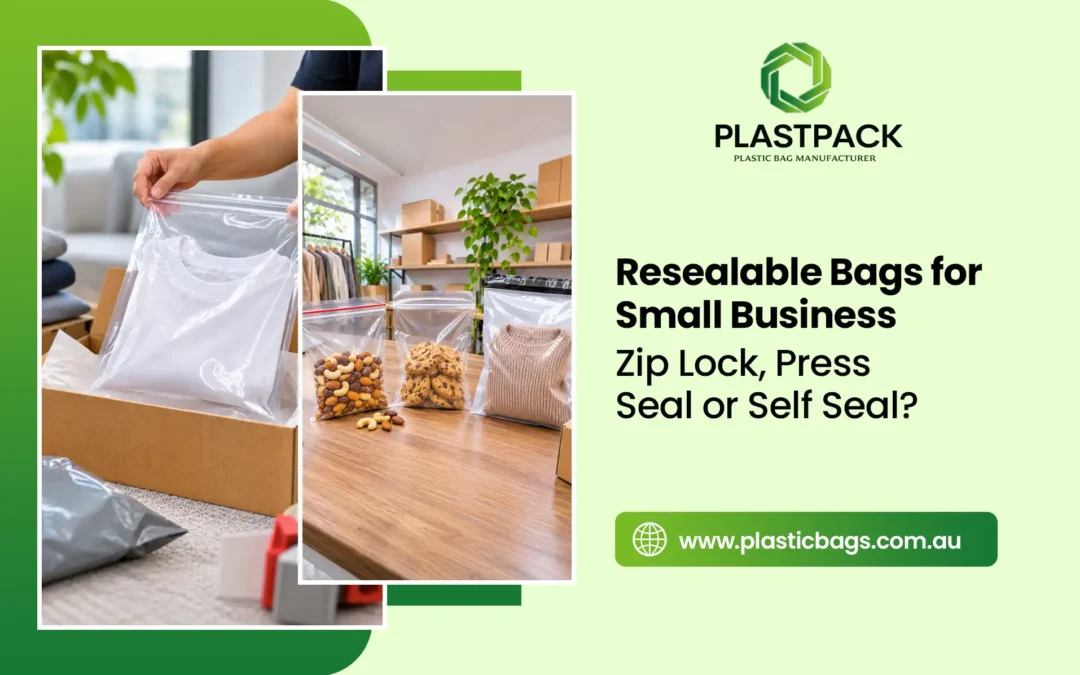
If you run a small business and you are buying resealable bags, the naming alone is enough to slow you down. Zip lock, press seal, self seal, snap lock, grip seal, click lock, the terms get used loosely and often for the same product, sometimes for different ones. This page clears it up in plain terms, so you can match the right closure to how your business actually packs, seals and ships, and order with confidence.
Plastpack (formerly Churchill & Coombes) manufactures resealable bags in Australia, extruding the film, printing it and forming every bag in house, so the guidance here comes from making the product rather than reselling it.
Zip lock and press seal: the same bag, two names
Here is the first thing to settle. Zip lock and press seal describe the same closure: an interlocking rib and groove along the top of the bag that you press shut and pull open by hand, with no heat, tape or clips. Zip lock is the everyday name most people search for. Press seal is the trade name the packaging industry uses. Across Australia the same bag also goes by snap lock, grip seal, clip lock, click seal, resealable or reusable plastic bag, and sometimes magic seal bag.
So if a supplier lists “press seal” and you were looking for “zip lock,” you are looking at the same product. The difference between one listing and another is usually the film thickness and size, not the closure itself. Our zip lock and press seal range is exactly that product, made to a commercial standard.
What “self seal” actually means
This is where it pays to be careful, because “self seal” is used two different ways.
Loosely, some suppliers list self seal as just another name for the press-shut zip lock bag above. Properly, though, a self seal bag means something different: a bag with a peel-and-stick adhesive strip under a peel-off liner. You fold the flap over, press it down, and the adhesive bonds the bag closed. It is designed to seal firmly in one motion, and once sealed it shows if it has been opened, which makes it a tidier, more tamper-evident choice for packs that are closed once and sent out rather than opened and reclosed again and again.
So the practical distinction for a small business is this. A zip lock or press seal closure is for anything opened and reclosed repeatedly. A true self seal, or peel-and-seal, closure is for presenting or dispatching a pack that is sealed once. Our peel and seal polypropylene bags are the self seal option, with a clear, crisp finish that suits retail presentation.
Which resealable bag suits your small business?
The right closure comes down to how the pack is used after you fill it.
Choose a zip lock or press seal bag when the bag is opened and closed more than once: storing and portioning dry goods, keeping small parts and components together, kitting orders, holding samples, and resealable retail packs your customer opens at home. It is the workhorse resealable bag for most small businesses.
Choose a self seal, peel-and-seal bag when the pack is sealed once for display or dispatch and you want a clean, tamper-evident finish: retail presentation of a finished product, mail-outs, and anything where a crisp seal matters more than reopening.
If you are not sure, tell us how the pack is used and we will point you to the right one. Many small businesses end up carrying both, a press seal line for working storage and a self seal line for finished retail packs.
Choosing the right press seal grade
Once you have settled on a press seal or zip lock bag, the next choice is the grade, and there are three to know. Rather than repeat the full detail here, our guide on zip lock bag sizes and thickness walks through how to match micron to the job. In short:
The premium 50 micron press seal bag is the everyday standard for light contents, samples, small parts and general storage, with good clarity for seeing the contents.
The heavy duty 75 micron press seal bag is for sharper, heavier or more frequently handled contents such as fixings, hardware and components, where a thicker wall resists splitting.
The write-on panel press seal bag adds a matte white panel so you can label the contents, batch or date by hand, which suits parts, samples and anything you need to identify at a glance.
Branding your resealable bags
For small businesses selling a finished product, a plain bag with a sticker on it is the slow, costly way to brand. Printed bags carry your logo straight on the film, with nothing to apply by hand. We print custom printed press seal bags in house with up to six colours in Pantone or CMYK, so your branding, handling notes or compliance text goes straight onto the bag. For a retail pack, that reads as a finished product rather than a plain bag with a label added.
Buying resealable bags in bulk
Resealable bags are a running consumable, so a steady bulk supply at a sensible per-bag cost is what keeps a small business stocked without over-committing. We make the full press seal range in Australia and supply it in bulk, and because we hold around 50 tonnes of film on site, the material for most orders is already here. For regular buyers we can hold your size, grade and print on file so reordering is quick.
When a stock size does not fit, we make resealable bags to your size, thickness, seal and print, with a sample available before you commit. If you are setting up supply for the first time, our guide on buying plastic bags wholesale covers how to lock in a reliable bulk order. To match the right resealable bag to your products, contact the Plastpack team with your contents, size and quantity.
Frequently Asked Questions
What is the difference between zip lock and press seal bags?
There is none. Zip lock and press seal describe the same interlocking rib and groove closure that you press shut and open by hand. Zip lock is the everyday name, press seal is the trade name, and the real difference between listings is the film thickness and size.
Are self seal bags the same as zip lock bags?
Not quite. Some suppliers use “self seal” loosely for a zip lock bag, but properly a self seal bag has a peel-and-stick adhesive strip that seals the bag closed in one motion. It suits packs sealed once for display or dispatch, rather than opened and reclosed repeatedly.
Which resealable bag is best for a small business?
Use a zip lock or press seal bag for anything opened and reclosed, such as storage, parts, samples and resealable retail. Use a self seal, peel-and-seal bag for finished retail packs sealed once, where a clean, tamper-evident finish matters.
What thickness resealable bag do I need?
Use 50 micron for light contents and general storage, and 75 micron heavy duty for sharp, heavy or often-handled items so the bag does not split. A write-on panel version adds a surface to label contents by hand.
Can I get resealable bags printed with my logo?
Yes. We print press seal bags in house with up to six colours in Pantone or CMYK, so your logo, handling notes or compliance text goes straight onto the bag, which is faster and tidier than applying labels by hand.
Can I buy resealable bags in bulk or custom sizes?
Yes. We supply resealable bags in bulk across Australia and, as the manufacturer, make custom sizes, thicknesses, seals and printing to order, with film held on site to keep lead times short.