
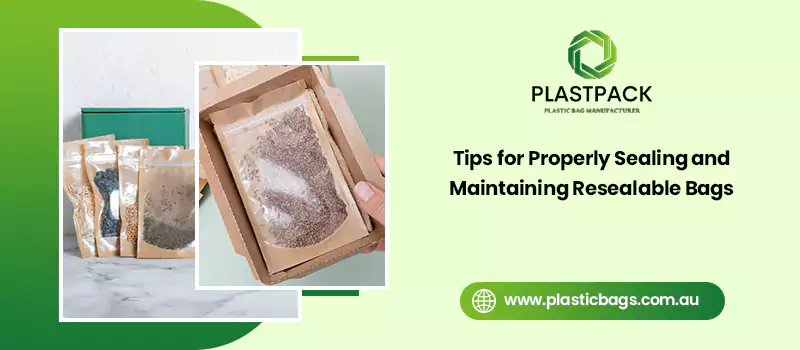
Resealable bags are one of those everyday items that most households and businesses take for granted until something goes wrong. A seal that will not close properly, a bag that splits along the zip track, contents that spill or go stale ahead of time, or a liner that fogs up and makes it impossible to see what is inside. These are frustrations that are almost always avoidable with the right technique and a little care.
Whether you are using press seal bags to store food in the fridge, packaging small parts in a workshop, keeping documents protected from moisture, or running a business that ships products in resealable pouches, getting the most out of your bags comes down to a few practical habits.
At Plastpack, we have been manufacturing plastic bags and packaging solutions for Australian businesses and households since 1928. Press seal bags, also commonly known as zip lock or resealable bags, are among the most widely used products in our range. In this guide, we share what we know about using them properly, storing them well, and choosing the right bag for the job in the first place.
Understanding How Resealable Bags Work
Before getting into tips and techniques, it helps to understand the basic mechanics of a resealable bag. Most press seal bags use an interlocking plastic track system along the top of the bag. One side of the track has a raised ridge and the other has a corresponding groove. When the two sides are pressed together with even pressure along the full width of the bag, the ridge locks into the groove and creates a seal.
The quality of that seal depends on several factors: the precision of the track during manufacturing, the thickness and flexibility of the film, the cleanliness of the track at the time of sealing, and the technique used to close the bag. A well-made bag sealed correctly will hold its contents securely, resist moisture ingress, and maintain an airtight environment that slows oxidation and bacterial growth.
A poorly made bag, or a well-made bag sealed incorrectly, will leak, let in air, and fail to protect its contents. The difference between these two outcomes is often just a matter of knowing what you are doing.
Choosing the Right Bag Before You Start
The single most important step in getting a good seal is choosing a bag that is appropriate for what you need it to do. No amount of good technique will compensate for using the wrong bag.
Match the Size to the Contents
A bag that is too small for its contents will be difficult to seal without trapping air bubbles or placing stress on the track. A bag that is far too large for its contents wastes material and makes it harder to push all the air out before sealing, which reduces the protective effect of the bag.
As a general rule, choose a bag where the contents fill roughly two-thirds to three-quarters of the internal volume. This leaves enough room at the top to seal cleanly without the contents getting in the way of the press seal track, while keeping the bag compact enough to manage the air inside effectively.
Match the Thickness to the Application
Press seal bags come in a range of film thicknesses, measured in microns (µm). Thicker bags are stronger, more resistant to puncture and tearing, and better suited to heavier or sharper contents. Thinner bags are lighter, more flexible, and generally sufficient for lightweight items like documents, food, or small retail products.
At Plastpack, our press seal bags are available in 50µm (standard/premium) and 75µm (heavy duty) thicknesses. The 50µm option is well suited to food storage, document protection, retail packaging, and general household use. The 75µm heavy-duty bags are better suited to industrial applications, heavier components, sharp-edged items, and any situation where the bag will be handled repeatedly or stored under pressure.
Using a bag that is too thin for the job is one of the most common causes of bag failure in commercial and industrial settings. If bags are splitting or developing pinholes in use, moving up to a heavier gauge is usually the solution.
Consider Whether You Need a Write-On Panel
For applications where labelling is important, such as storing food with date markings, organising workshop components, or managing archived documents, bags with a write-on panel are a practical choice. Plastpack stocks press seal bags with a white write-on panel that accepts standard permanent marker. This makes it straightforward to label contents without needing separate adhesive labels that may fall off or become unreadable.
How to Seal a Press Seal Bag Correctly
Sealing a resealable bag sounds simple, and it is, once you know the technique. The most common mistakes are easy to fix once you are aware of them.
Step 1: Keep the Track Clean and Dry
The press seal track must be clean and dry for a reliable seal. Even a small amount of food, liquid, oil, or dust caught in the track will prevent the ridge and groove from interlocking fully, leaving a gap through which air and moisture can pass.
Before sealing, wipe the inside of the track with a clean, dry cloth or paper towel if there is any risk of contamination. When filling bags with liquid-adjacent contents such as marinated meat, wet produce, or oily components, be particularly careful to keep the top 20 to 30 millimetres of the bag clear of the contents.
In a food service or commercial setting, making a habit of wiping the track as a standard step before sealing will significantly reduce the number of bags that fail to seal properly.
Step 2: Remove as Much Air as Possible
Air inside a resealable bag is the enemy of freshness. Oxygen promotes oxidation and bacterial growth, which accelerates spoilage in food and can cause deterioration in other sensitive materials.
To remove air before sealing, hold the bag with the opening facing up and gently press down on the contents with one hand while using the other hand to close the seal progressively from one end to the other, leaving a small gap of about two centimetres at one corner. Then press that final corner closed quickly. This simple technique removes a significant portion of the air inside the bag without any special equipment.
For applications where oxygen removal is critical, such as storing dried goods, sensitive electronics components, or pharmaceutical products, a more thorough approach is needed. You can use a straw to gently draw out additional air through the final gap before sealing, or invest in a small vacuum sealing tool compatible with press seal bags. Alternatively, step up to purpose-built vacuum bags for applications where complete air removal is essential.
Step 3: Close the Seal with Even, Firm Pressure
The most effective way to seal a press seal bag is to pinch the track between your thumb and forefinger and run your fingers along the full width of the bag from one end to the other in a single, smooth motion. Apply firm, even pressure throughout.
Avoid pressing down from the top with your whole hand, as this tends to apply uneven pressure and miss sections of the track. The pinching and sliding motion is far more reliable.
Once you have run your fingers across once, go back and check the entire length of the seal by looking at the track from the front. A properly sealed track should show a continuous, unbroken coloured line (if the bag has a coloured seal indicator) or a uniform groove-and-ridge engagement with no visible gaps or separations.
If you find a spot that has not sealed, simply run your fingers across that section again with firm pressure. Do not try to press from directly above; maintain that pinching motion along the track.
Step 4: Test the Seal Before Storing
For any application where the seal matters, take five seconds to test it before putting the bag away. Hold the sealed bag upside down over the bench for a few seconds. If the contents do not move toward the seal and there is no leakage, the seal is holding. For bags containing liquids or very fine particles, give the bag a gentle shake while held upside down.
If the seal fails this test, open the bag, check the track for debris or moisture, wipe it clean, and reseal using the correct technique. Do not simply store a bag you know has an uncertain seal and hope for the best.
Tips for Specific Applications
Food Storage
Resealable bags are widely used for food storage in both home and commercial kitchens, and the following practices will get the best results:
Always allow hot food to cool before placing it in a resealable bag. Steam from hot food will condense inside the bag, adding moisture to the contents and the track. This makes it harder to get a clean seal and creates a more humid environment that can accelerate bacterial growth.
Store food-filled resealable bags flat in the fridge or freezer where possible. Flat storage keeps the seal at the top of the bag rather than on its side, which reduces the chance of contents migrating into the track and compromising the seal over time. It also makes much more efficient use of fridge and freezer space.
Label bags with the contents and date using a permanent marker or a write-on panel bag. Food that is correctly labelled is far less likely to be forgotten at the back of the fridge, which reduces food waste.
For freezer storage, use bags specifically rated for freezer use or bags at the heavier end of the thickness range. Thin bags become brittle at low temperatures and are more prone to cracking or splitting. The heavier 75µm bags handle freezer conditions better than standard weight bags.
Do not overfill bags destined for the freezer. Liquids expand as they freeze, and an overfilled bag of liquid that freezes solid will place enormous pressure on the seal from the inside. Leave room for expansion.
Document and Archival Storage
Resealable bags are excellent for protecting documents, photographs, certificates, and other paper items from moisture, dust, and handling damage. For archival purposes, choose a heavier gauge bag and consider double-bagging particularly valuable items.
When placing documents in bags, remove them from any ring binders or clips that could puncture the bag. Slide documents in carefully rather than forcing them to avoid creating stress points in the film or near the seal track.
Store document bags flat, away from direct sunlight and heat sources. Prolonged UV exposure will cause the film to yellow and become brittle over time, regardless of the quality of the bag.
Workshop and Industrial Use
In workshops, warehouses, and industrial settings, resealable bags are used to organise small parts, fasteners, electronic components, tools, and sample items. Heavy-duty 75µm bags are the right choice for this environment.
When storing small metal parts, be aware that sharp edges and corners can puncture bag walls. Placing a small piece of foam, cardboard, or fabric inside the bag as a buffer can extend the life of the bag considerably in these applications.
In environments where bags are handled frequently, opened and resealed multiple times, or exposed to oils and lubricants, inspect the seal track regularly for wear or contamination. A track that has been repeatedly opened and closed over a long period will eventually show wear and may no longer seal reliably. At that point, the bag should be replaced rather than resealed and trusted with valuable contents.
Retail and Product Packaging
Many small businesses use press seal bags to package retail products, samples, and promotional items. For retail applications, presentation matters as much as function. Use the correct bag size so the product sits neatly inside without excessive empty space. A product swimming in a bag that is three times too large looks unprofessional and wastes material.
If your products need branding, Plastpack offers custom printed press seal bags that carry your logo and messaging. This turns a functional packaging item into a brand touchpoint, which is particularly valuable for e-commerce businesses where the unboxing experience shapes customer perception.
Seal retail bags carefully and check each one before packing. A bag with a failed or partial seal arriving at a customer’s door creates a poor impression that is disproportionate to the cost of the bag itself.
Maintaining and Reusing Resealable Bags
One of the advantages of quality resealable bags is that, when properly maintained, they can be opened, emptied, cleaned, and reused multiple times before they need to be replaced. This reduces waste and lowers the cost per use over time.
Washing and Drying
Press seal bags used for food can be washed and reused if they contained dry goods, non-greasy solids, or produce. Turn the bag inside out and wash it with warm soapy water, rinse thoroughly, and allow it to air dry completely before reuse. A bag drying rack or simply draping the bag over a cup or bottle works well for this.
Do not reuse bags that contained raw meat, fish, seafood, or raw eggs, even after washing. The risk of cross-contamination is not worth taking. These bags should be disposed of after a single use.
Do not put resealable bags in the dishwasher. The heat and pressure of a dishwasher cycle will distort the film and damage the seal track, making the bag unusable.
Inspecting Before Reuse
Before reusing any resealable bag, hold it up to a light source and check for pinholes, thin spots, tears near the seal, or visible wear in the track. A bag with any of these issues should be retired and replaced. Using a compromised bag for food storage or any application where the seal genuinely matters is not worth the risk.
Storing Bags When Not in Use
Keep unused bags flat in their original packaging or in a cool, dry drawer away from direct sunlight. Heat and UV exposure degrade polyethylene film over time, reducing flexibility and increasing the chance of cracking. Bags stored in a hot garage or exposed to strong sunlight through a window will deteriorate faster than bags kept in a cool interior environment.
Common Mistakes and How to Avoid Them
Filling the bag too full: Overfilled bags place stress on the seal from the inside and make it nearly impossible to get a clean close. Leave adequate space at the top.
Sealing a wet or contaminated track: Any foreign material in the track prevents a complete seal. Wipe the track clean before closing.
Using the wrong thickness: A bag that is too thin for its contents will fail in use. When in doubt, go heavier.
Not testing the seal: Assuming a bag is sealed without checking it first is a common shortcut that leads to spills, spoilage, and disappointment. Ten seconds of checking saves significant inconvenience later.
Storing in hot or sunny conditions: Heat and UV degrade the film and can cause the track to deform, making bags impossible to seal properly. Store bags in cool, dry conditions.
Forcing sharp or rigid items into bags: Edges and corners that punch through the bag wall make the bag useless and potentially create a mess. Buffer sharp items or use a heavier gauge bag.
Why Bag Quality Makes a Difference
Not all resealable bags are manufactured to the same standard. The quality of the press seal track, the consistency of the film thickness, the integrity of the bottom and side seals, and the reliability of any additional features such as write-on panels or coloured seal indicators all vary significantly between manufacturers.
A well-manufactured press seal bag will seal reliably, hold its contents securely, remain clear and undistorted after repeated opening and closing, and maintain its physical integrity throughout the intended storage period. A poorly manufactured bag may have an inconsistent track that never seals fully, thin spots in the film that split under moderate pressure, or seals that delaminate when the bag is opened more than a few times.
At Plastpack, we manufacture our press seal bags at our Australian facility, controlling the film extrusion and bag-forming processes in-house. This gives us direct control over film consistency, track quality, and seam strength across every batch we produce. We hold approximately 50 tonnes of film stock at our factory, which allows us to maintain short lead times and consistent availability across our product range.
Our press seal bags are available in two thicknesses, 50µm standard and 75µm heavy duty, and in a wide range of sizes to suit household, commercial, retail, and industrial applications. We also offer bags with a white write-on panel for applications where labelling is important.
If you are buying press seal bags for a business and reliability matters, sourcing from a manufacturer with genuine quality control is worth the consideration. A bag that fails costs more than just the bag itself.
Getting Help Choosing the Right Bag
With the range of sizes, thicknesses, and options available, choosing the right press seal bag for a specific application is not always straightforward. The Plastpack team is available to help you work through the options and find the right product for your needs.
Whether you need standard household press seal bags in everyday sizes, heavy-duty bags for an industrial or workshop environment, write-on panel bags for a food service or medical application, or custom printed bags for a retail or e-commerce business, we can point you in the right direction.
Frequently Asked Questions
Why does my resealable bag keep failing to seal even when I close it carefully?
The most likely cause is contamination in the press seal track. Even a small amount of food residue, oil, moisture, or dust caught between the ridge and groove will prevent the two sides from interlocking fully, leaving a gap in the seal. Before closing any bag where the seal matters, wipe the inside of the track with a clean, dry cloth to remove any residue. Another common cause is using a bag that is too full, which places outward pressure on the track and prevents full engagement. If the bag is clean and correctly filled and still will not seal, the track may be damaged or the bag may have been stored in conditions that caused the film or track to deform. In this case, replace the bag.
How many times can I safely reuse a resealable bag?
This depends on the quality of the bag, the application, and how carefully it is handled. A good quality heavy-duty press seal bag used for dry goods or non-food items and handled carefully can be opened, emptied, washed, dried, and reused many times before it shows meaningful wear. For food applications, inspect the bag before each reuse for pinholes, thinning film, or track wear, and retire it at the first sign of deterioration. Do not reuse bags that held raw meat, fish, or eggs, regardless of how thoroughly they have been washed. For industrial or workshop use, check the track regularly for wear and replace bags that no longer seal reliably.
What is the difference between 50µm and 75µm press seal bags, and how do I know which one I need?
Micron (µm) is the unit used to measure film thickness in Australia. A 50µm bag is the standard weight and is appropriate for most everyday applications including food storage, document protection, retail packaging, and general household organisation. A 75µm heavy-duty bag is thicker, stronger, and more resistant to puncture and tearing. It is the right choice for heavier contents, sharp-edged items, workshop and industrial use, applications where the bag will be opened and resealed many times, and freezer storage where the additional rigidity helps the bag withstand low temperatures. When in doubt, the heavier bag is the more reliable choice. The cost difference per bag is generally small, and the performance difference can be significant.
Can I freeze food in press seal bags, and are there any special precautions I should take?
Yes, press seal bags can be used for freezer storage, and they are a practical and space-efficient option for portioning and freezing a wide range of foods. Use the heavier 75µm bags for freezer applications where possible, as thinner bags can become brittle at low temperatures and are more prone to cracking. Leave room in the bag for expansion, particularly when freezing liquids or high-moisture foods, as these expand as they freeze and will place pressure on the seal. Remove as much air as possible before sealing to reduce freezer burn. Label each bag with the contents and date before freezing. Do not place very hot food directly into a bag for freezing; allow it to cool to room temperature or refrigerator temperature first, then transfer to the bag and freeze.
Are Plastpack press seal bags food safe?
Yes. Plastpack press seal bags intended for food use are manufactured from food-grade polyethylene film that meets the relevant Australian standards for contact with food. Food safety and hygiene are fundamental considerations in how we manufacture and test our products. When purchasing any bags for food contact use, always check that the product is described as food grade by the manufacturer. Our team is happy to advise on the most suitable product for your specific food storage or food packaging application.